Artisan chocolate in Brussels: how do you recognise a real chocolate maker?
In Brussels, almost every shop window promises artisan, Belgian chocolate. These words do not all say the same thing: some are governed by law, others are not. Here is how to tell the difference, label in hand.
‘Artisanal’: a free word, a regulated status
In Belgium, no text defines ‘artisanal’ products in general, and none does so for chocolate. According to the guidelines of the FPS Economy, the commercial use of the word is free, but it must not mislead, and the company using it must be able to justify it. The FPS sets three criteria, at least one of which must be met, with nothing that contradicts it: the nature or quality of the ingredients (for example unprocessed, without additives), production with essentially manual aspects, and production on a small or very small scale.
The status of artisan, on the other hand, does exist in law. Under the law of 19 March 2014, in force since June 2016, a company with fewer than twenty workers whose activity has essentially manual aspects and an authentic character can apply to the Artisans Commission of the FPS Economy for recognition. Recognition is free and voluntary, valid for six years, and comes with a logo; recognised artisans are listed in a public register.
This status concerns the company, not the product. The FPS Economy makes it clear: a product is not artisanal simply because a recognised artisan made it, and a company without recognition may call its products artisanal if it can justify it. The logo is a point of reference, not a guarantee of the recipe.
Read the label, or ask for the composition
The list of ingredients runs from the largest to the smallest by weight (EU Regulation 1169/2011). To be called ‘chocolate’, a product must contain at least 35% total dry cocoa solids, including at least 18% cocoa butter (Belgian royal decree of 19 March 2004).
The same decree allows up to 5% of vegetable fats other than cocoa butter. In that case, the label must carry, near the name of the product, the statement ‘contains vegetable fats in addition to cocoa butter’. If you read it, the chocolate is not made with pure cocoa butter.
The statement ‘cocoa solids: … % minimum’ is compulsory on a bar of dark or milk chocolate, but not on a box of pralines or on white chocolate. We explain what that percentage adds up to in our article on the percentage on a chocolate bar.
‘Belgian chocolate’: a code, not a law
No law specifically protects the name ‘Belgian chocolate’: Choprabisco, the Belgian federation of the sector, says so itself. Since 2008, it has applied a code of conduct that its signatories undertake to respect. Under this code, Belgian chocolate is chocolate whose complete process of mixing, refining and conching is done in Belgium.
The code says nothing about the origin of the beans or about vegetable fats. ‘Belgian chocolate’ therefore tells you where the chocolate was made, not where the cocoa comes from, nor whether it is made with pure cocoa butter. EU law, however, forbids any misleading information, in particular about the country of origin and the method of production.
The praline: at least 25% chocolate
The praline has a legal definition: a bite-sized product made of filled chocolate, or of chocolate combined with other ingredients, with chocolate making up at least 25% of its weight (royal decree of 19 March 2004).
Pralines sold loose at the counter escape most labelling requirements, but not allergens: the chocolate maker must be able to tell you about them, in writing, or orally through trained staff (Regulation 1169/2011 and royal decree of 17 July 2014). Milk, nuts, eggs and soy are among the fourteen allergens on the European list.
Made where, and from what?
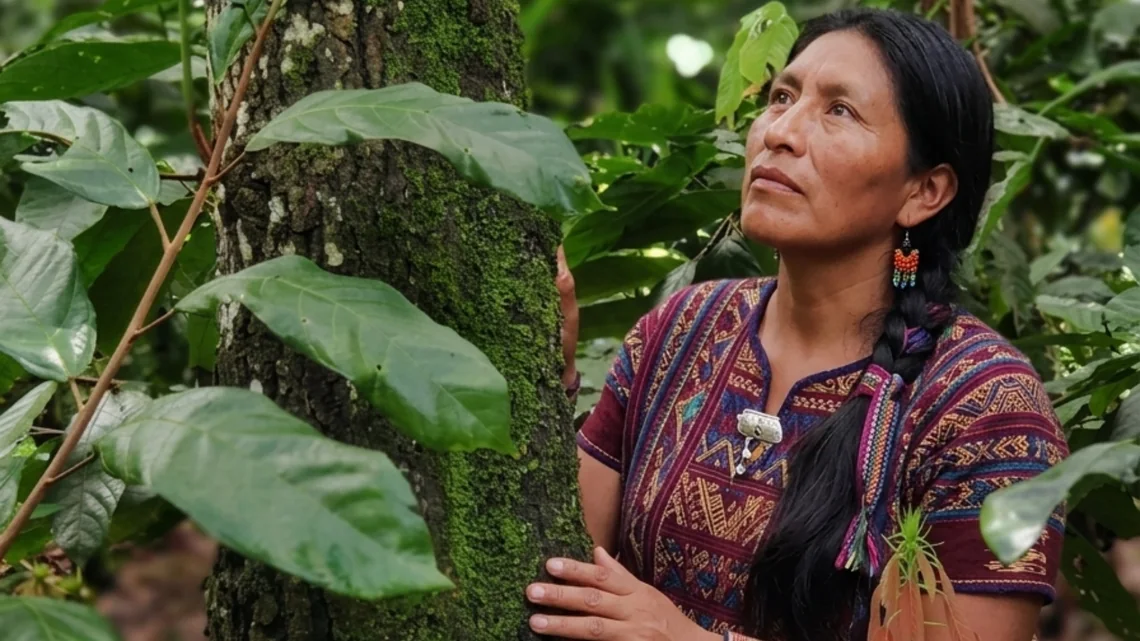
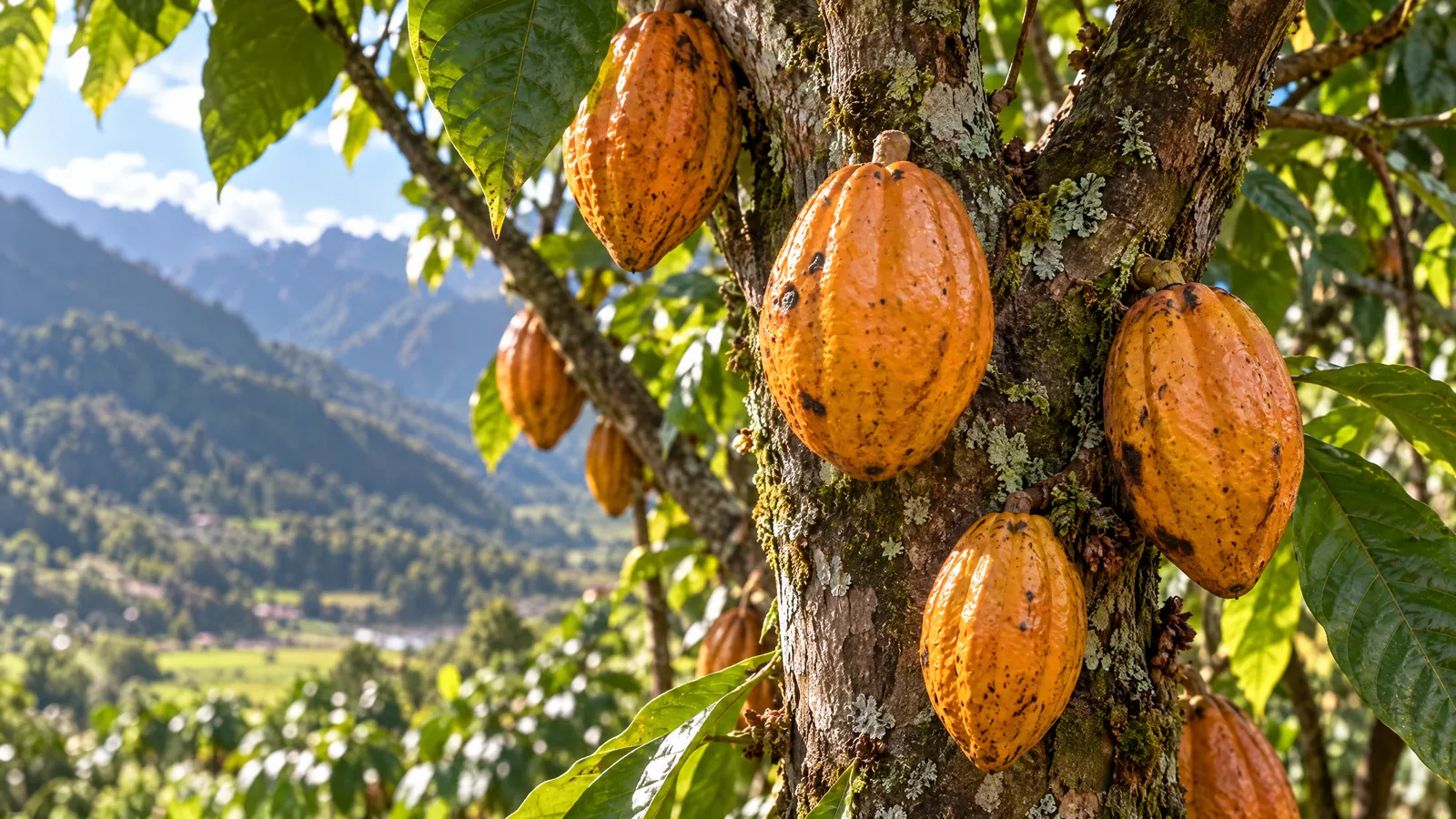
Many artisans work from ready-made couverture chocolate, which they melt, temper, mould and fill. Others start from the bean: that is Bean to Bar; Tree to Bar goes back to the tree. What matters is knowing which approach is at work. Ask: a chocolate maker who knows their supply chain will answer plainly and tell you where their cocoa comes from.
The date on a box is the responsibility of the operator who packs it for the consumer: depending on the product, they choose between a use-by date and a best-before date, as the Belgian food safety agency (FASFC) points out. For chocolate, the FASFC also flags ‘fat bloom’, a white bloom caused by the cocoa butter recrystallising.
At the Atelier Sainte Catherine
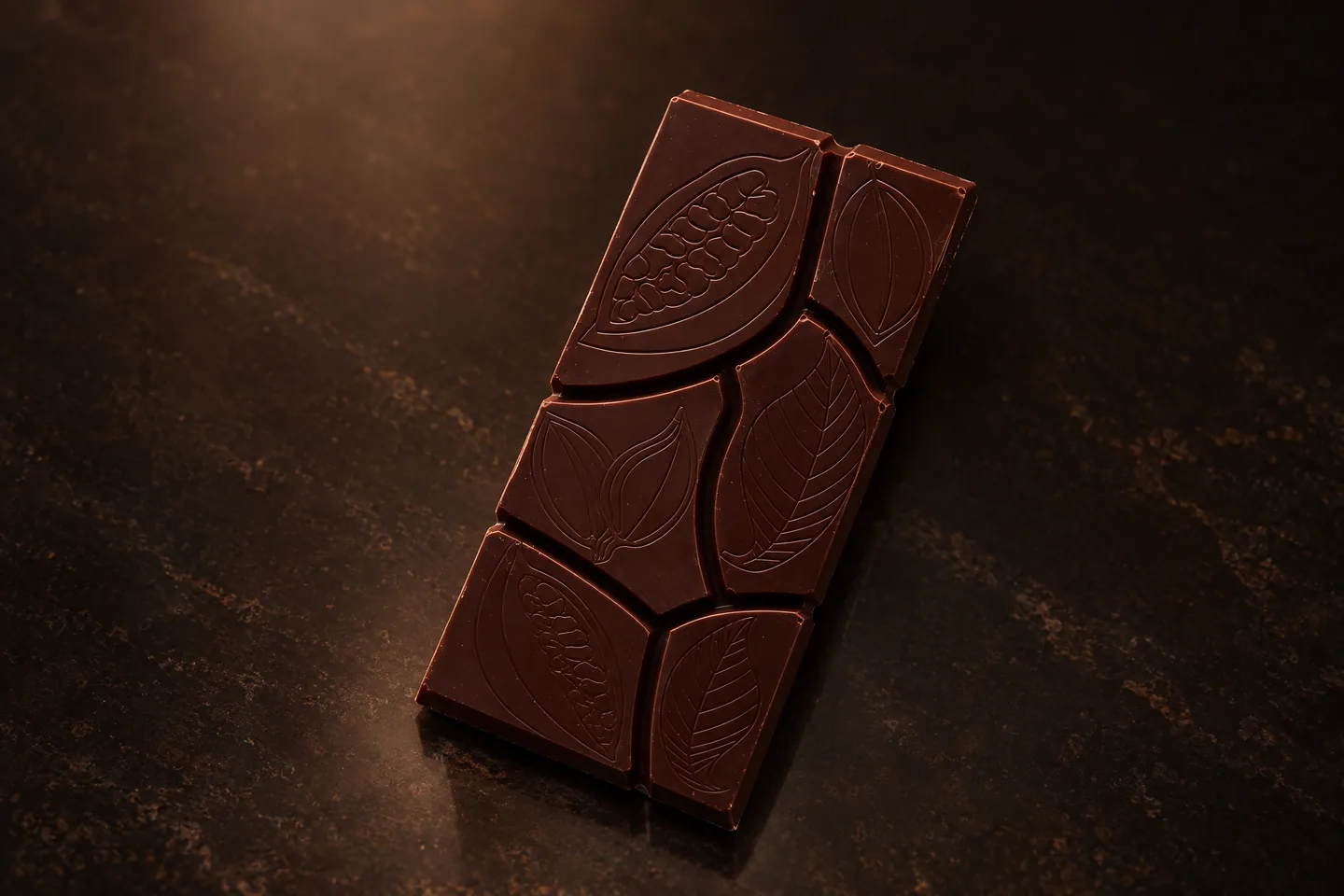
Our Tree to Bar bars come from native Peruvian cocoas, Chuncho and Blanco de Piura, followed from the tree by a specialised partner, then finished in our workshop on the Quai aux Briques. Our chocolates use three ingredients only: pure cocoa mass, cocoa butter from the same beans and locally produced panela cane sugar. No flavourings, no emulsifiers, no substitute fats. Solo Cacao is even made without added cocoa butter.
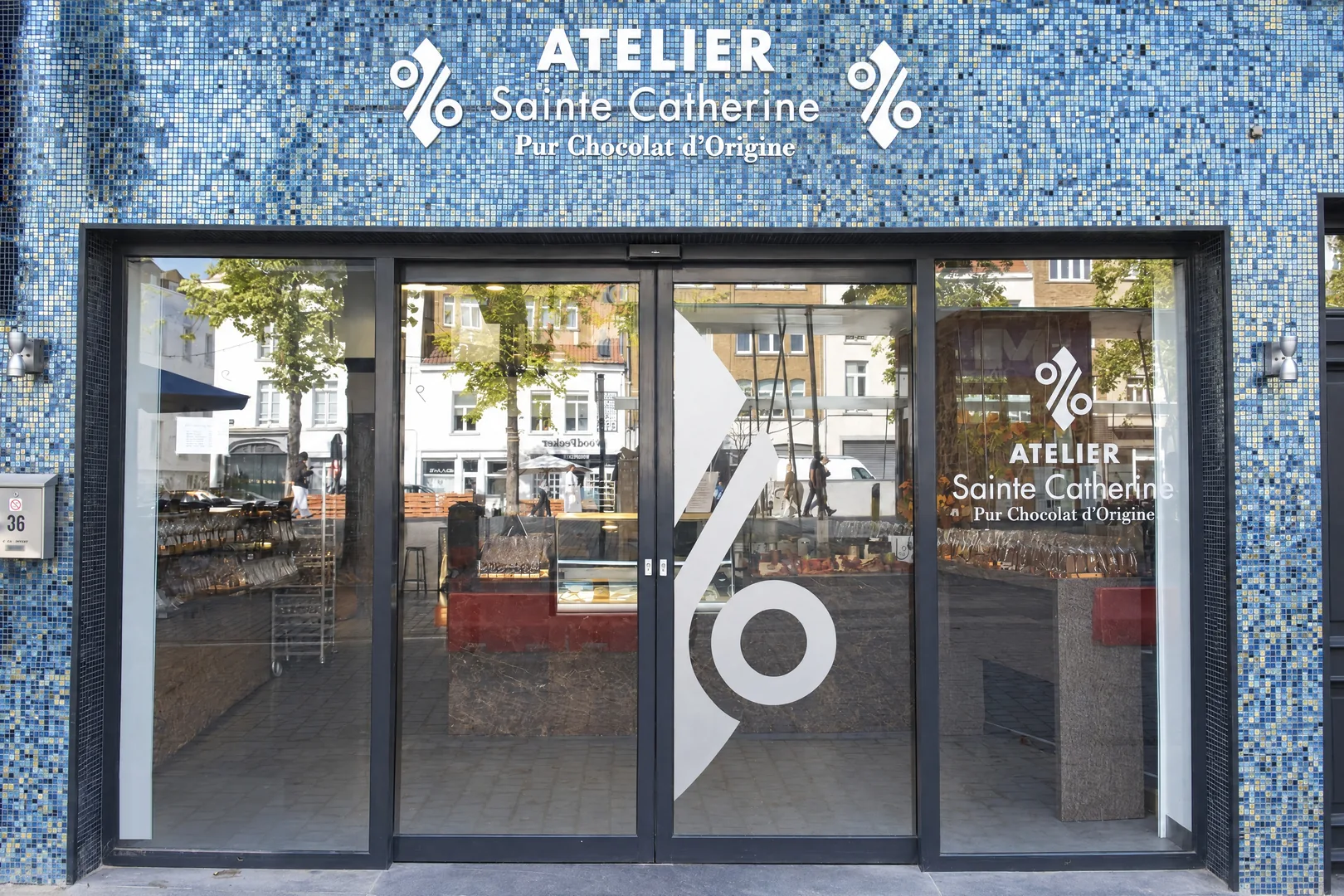
The Sainte-Catherine shop, Quai aux Briques 36, is part of the workshop: behind the glass façade, the chocolate takes shape every day, and our biscuits, ice creams and sorbets are made there on site. Our second shop is in the Sablon, Rue de Rollebeek 26. Ask us your questions in person: it is still the best way to recognise a chocolate maker.
Sources
- Belgian royal decree of 19 March 2004 on cocoa and chocolate products (Justel, in French)
- Directive 2000/36/EC relating to cocoa and chocolate products (EUR-Lex)
- Regulation (EU) 1169/2011 on the provision of food information to consumers (EUR-Lex)
- Belgian royal decree of 17 July 2014 on allergens in non-prepacked foods (Justel, in French)
- Belgian law of 19 March 2014 on the legal definition of the artisan (Justel, in French)
- FPS Economy, the legal recognition of artisans (in French)
- FPS Economy, using the word ‘artisanal’ (in French)
- Choprabisco, code of conduct for the protection of Belgian chocolate
- Choprabisco, Belgian Chocolate Code (PDF)
- FPS Economy, register of recognised artisans (in French)
- FASFC, circular on expiry dates, 20 January 2023 (in French)